You are currently on the International (English) version.
Looks like you are in United States.
Switch to local content?












Heidelberg Engineering Expands Ophthalmic Portfolio with New Imaging, Automation and Surgical Visualization Capabilities
Newly available technologies and capabilities across posterior and anterior segment imaging, plus surgical visualization, will be featured at AAO 2026.
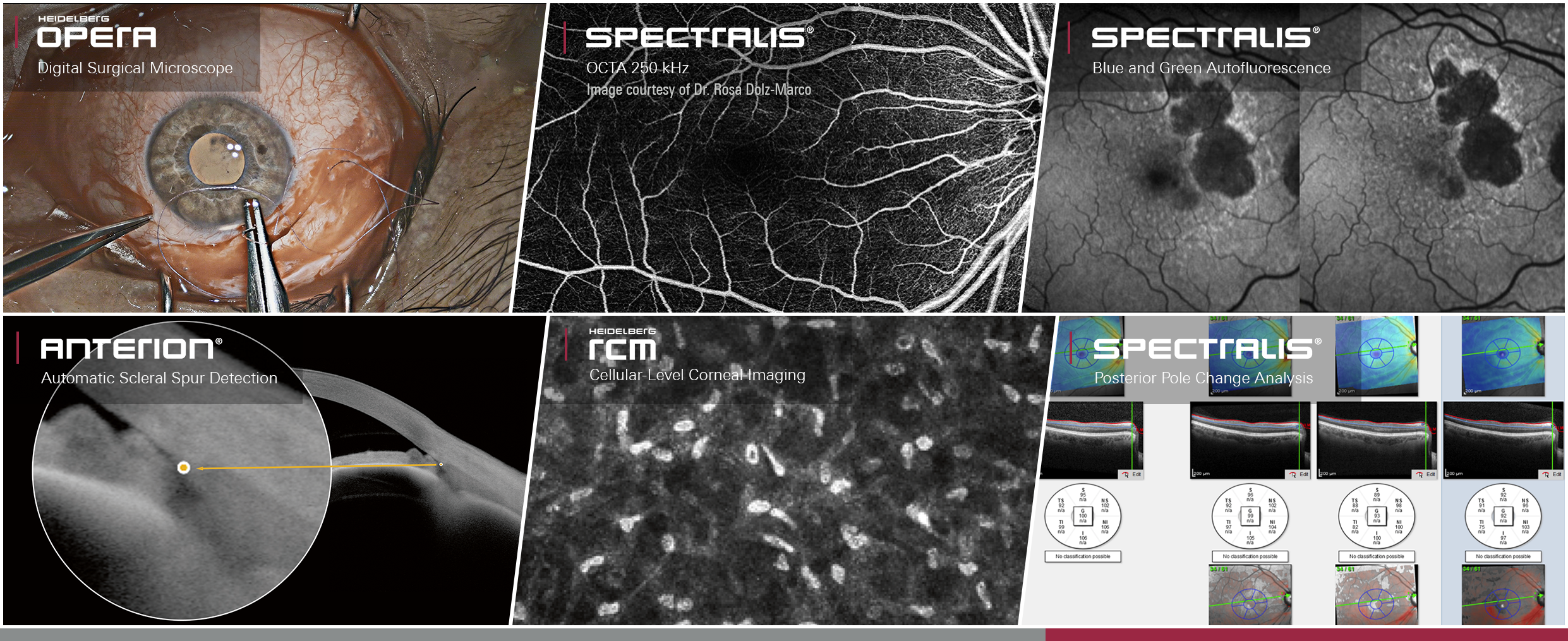
FRANKLIN, Mass. – Sept. 30, 2026 – Heidelberg Engineering will showcase its latest innovations in ophthalmic imaging and surgical visualization at the American Academy of Ophthalmology (AAO) Annual Meeting, October 10–12, 2026, in New Orleans. Attendees can uncover new technologies and workflow advances across the company’s posterior segment, anterior segment, and surgical portfolio at the EssilorLuxottica booth #2719.
“This is our most robust AAO in Heidelberg Engineering’s 36-year history, with more new innovation to share than ever before,” said Jeff Sieve, President, Heidelberg Engineering, Inc. “From advanced diagnostic imaging and greater automation to digital visualization in the operating room, we’re bringing innovation across the patient journey to help clinicians work more efficiently, see with greater clarity, and make confident clinical decisions. We are excited for clinicians to experience it firsthand.”
Heidelberg OPERA: Digital Visualization Comes to the Operating Room
Now commercially available in the United States, Heidelberg OPERA is a fully digital ophthalmic surgical microscope platform designed to transform the way surgeons see, work, and teach in the operating room. At AAO, surgeons can get hands-on with Heidelberg OPERA in an in-booth “wet lab” and see its exceptional digital visualization on large-format displays, with outstanding color, contrast, resolution, and advanced image enhancements that bring subtle anatomical details into clear view.
Heidelberg RCM: Cellular-Level Corneal Imaging Returns
Heidelberg RCM marks the return of in vivo confocal microscopy to the Heidelberg Engineering portfolio, answering longstanding demand from corneal specialists following the discontinuation of HRT3 RCM. The new system provides high-resolution, wider-field microscopic images of the cornea, enabling clinicians to examine cellular-level morphology from the epithelium to the endothelium, with a field of view of up to 600 x 600 μm.
SPECTRALIS®: Faster OCTA and Expanded Multimodal Imaging
Following FDA clearance earlier this year, the latest SPECTRALIS® software release is now commercially available. The release introduces 250 kHz OCT angiography (OCTA), providing the fastest OCTA image acquisition yet on the platform and supporting efficient workflows in high-volume clinical routines.
The Green Autofluorescence Module expands SPECTRALIS® multimodal imaging, improving visualization of the macula, including foveal sparing in macular atrophy. Used alongside BluePeak (Blue Autofluorescence) imaging, it provides complementary perspectives on retinal structure and metabolic changes. For glaucoma management, Posterior Pole Change Analysis makes it easier to visualize and monitor structural change over time by comparing multiple examinations in one comprehensive view.
ANTERION®: More Automation from Exam to Surgical Planning
New FDA-cleared Automatic Scleral Spur Detection for ANTERION® automatically identifies the scleral spur and calculates key anterior chamber measurements, helping remove ambiguity from angle assessment. ANTERION® now also automatically transfers key cataract measurement reports to compatible surgical planning platforms, reducing manual data entry and opportunities for data-entry errors. Together, these new capabilities bring greater automation from examination and measurement through surgical planning.
Uncover Heidelberg Engineering’s Most Extensive Showcase Yet
With more newly available capabilities on display than ever before, attendees can get hands-on with Heidelberg Engineering technologies at EssilorLuxottica booth #2719. Visitors can also gain insights from real-world clinical cases, hear directly from clinicians, and connect with peers in the Heidelberg Engineering in-booth theater.