







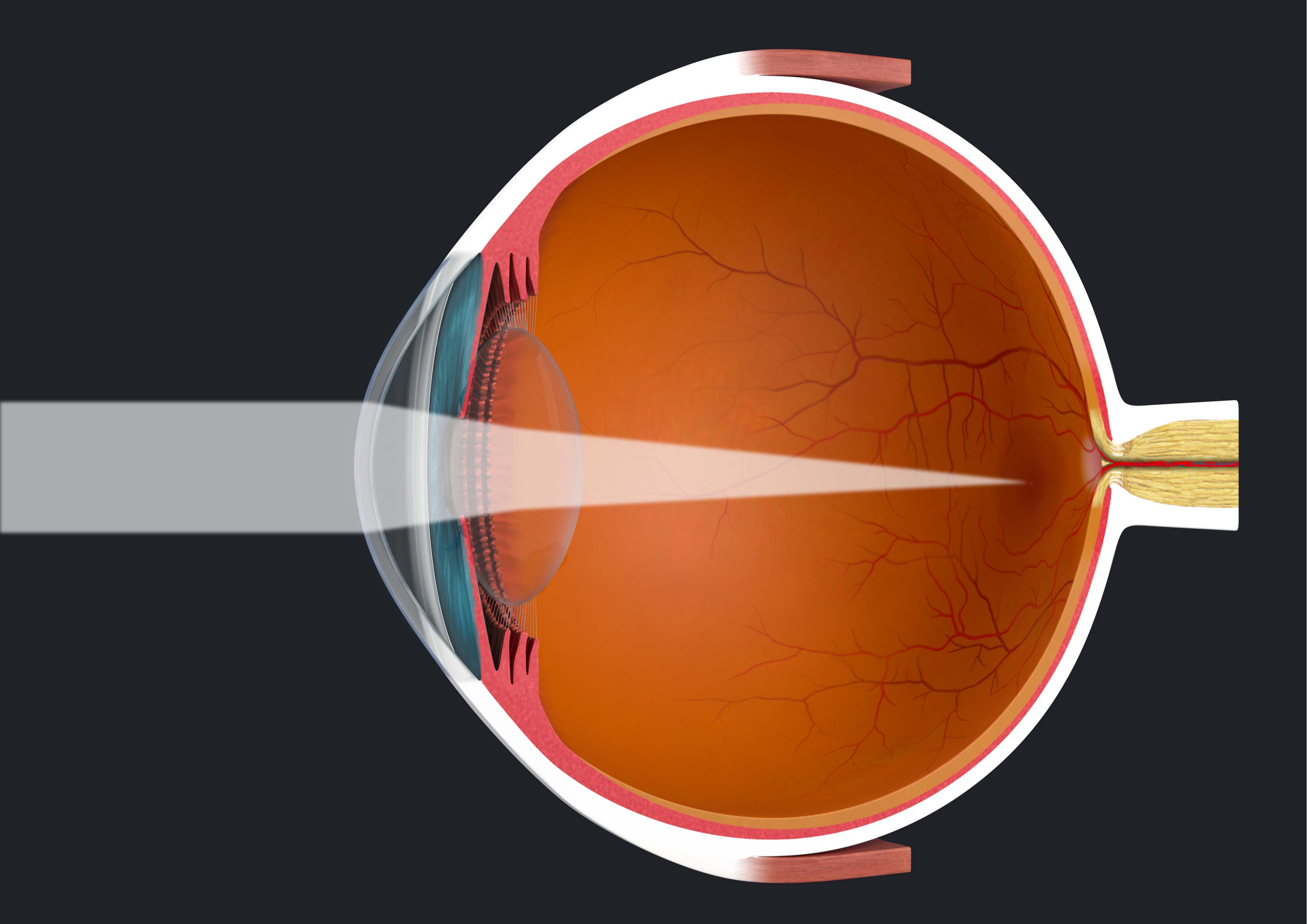
Emmetropia

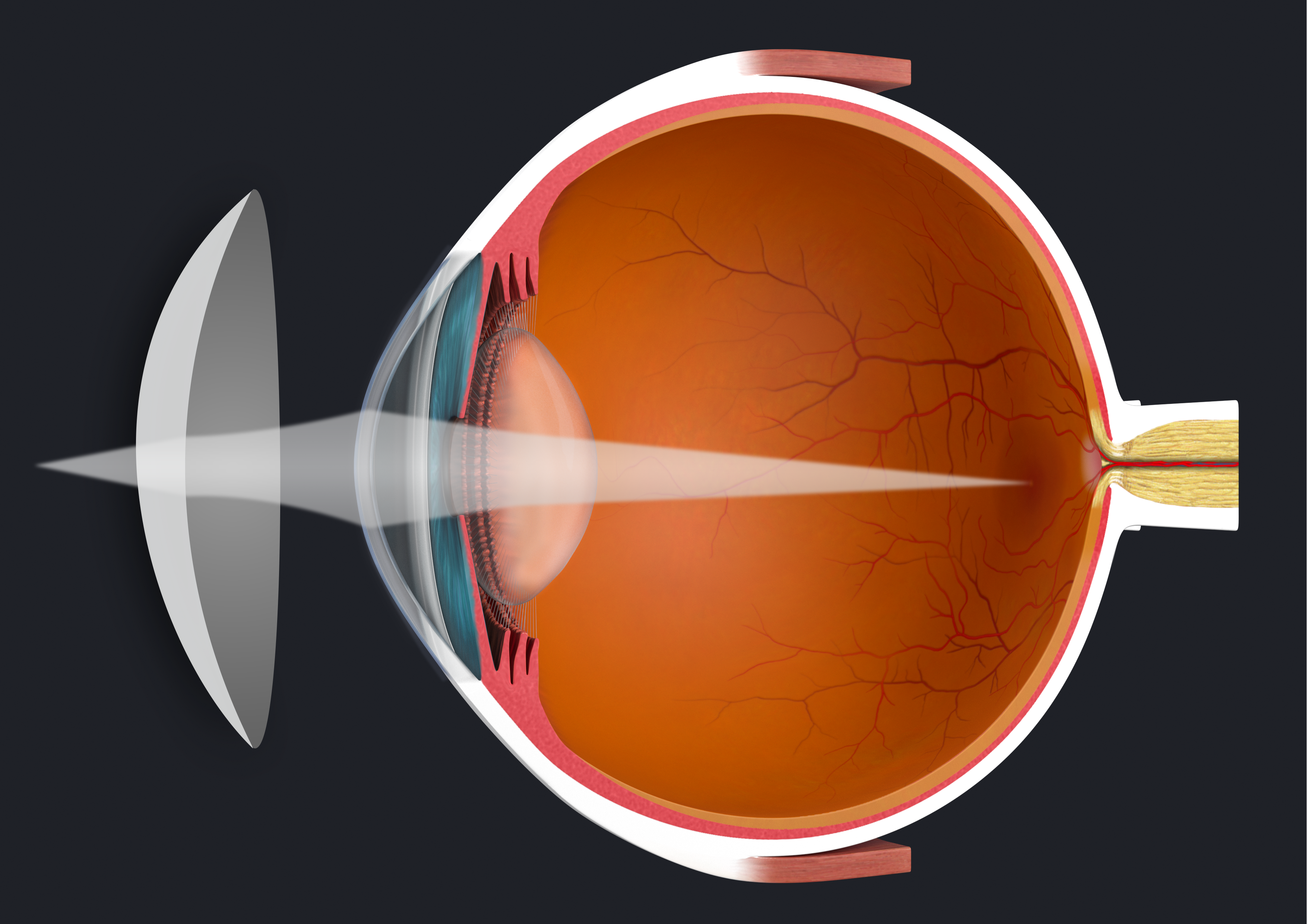
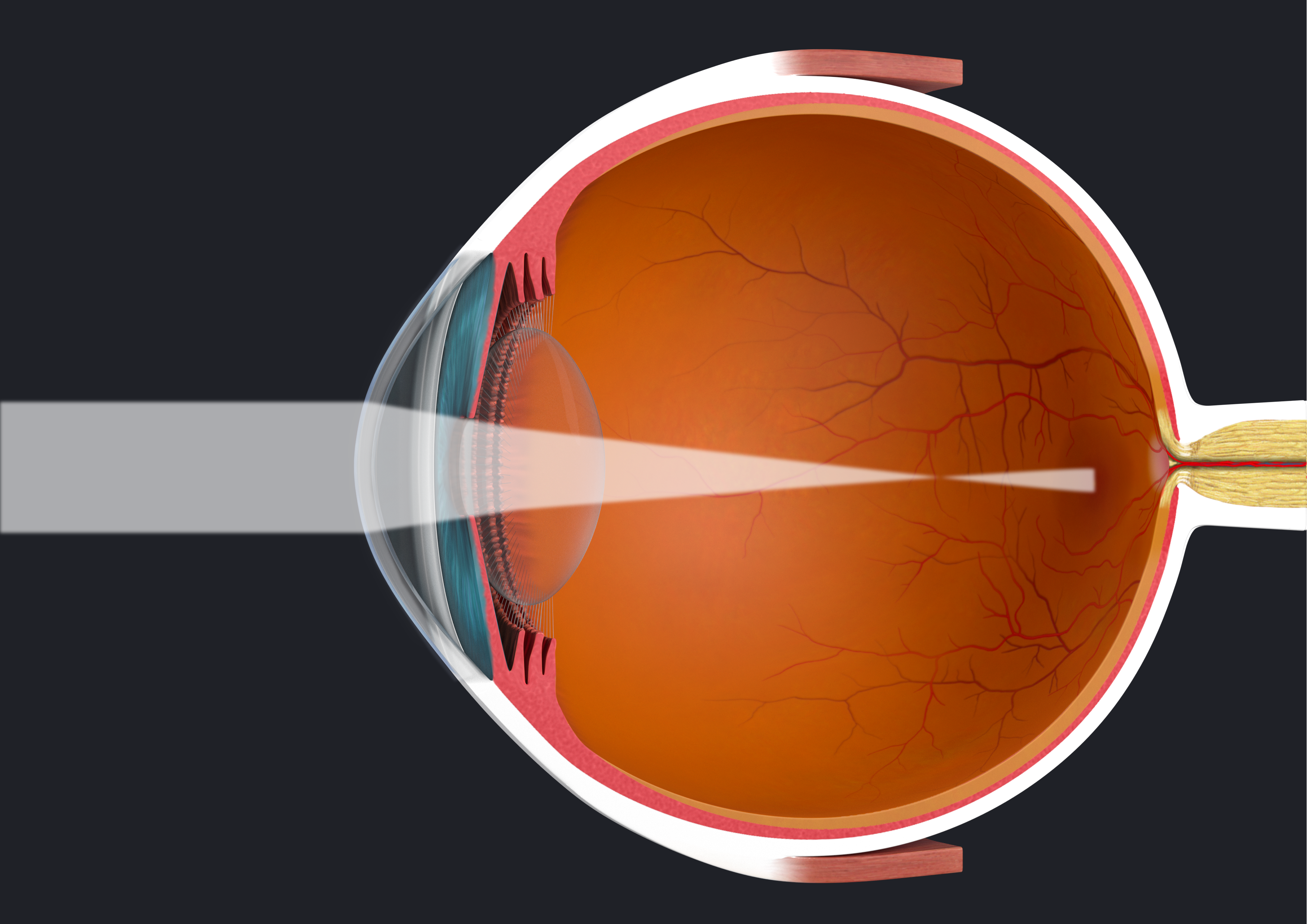
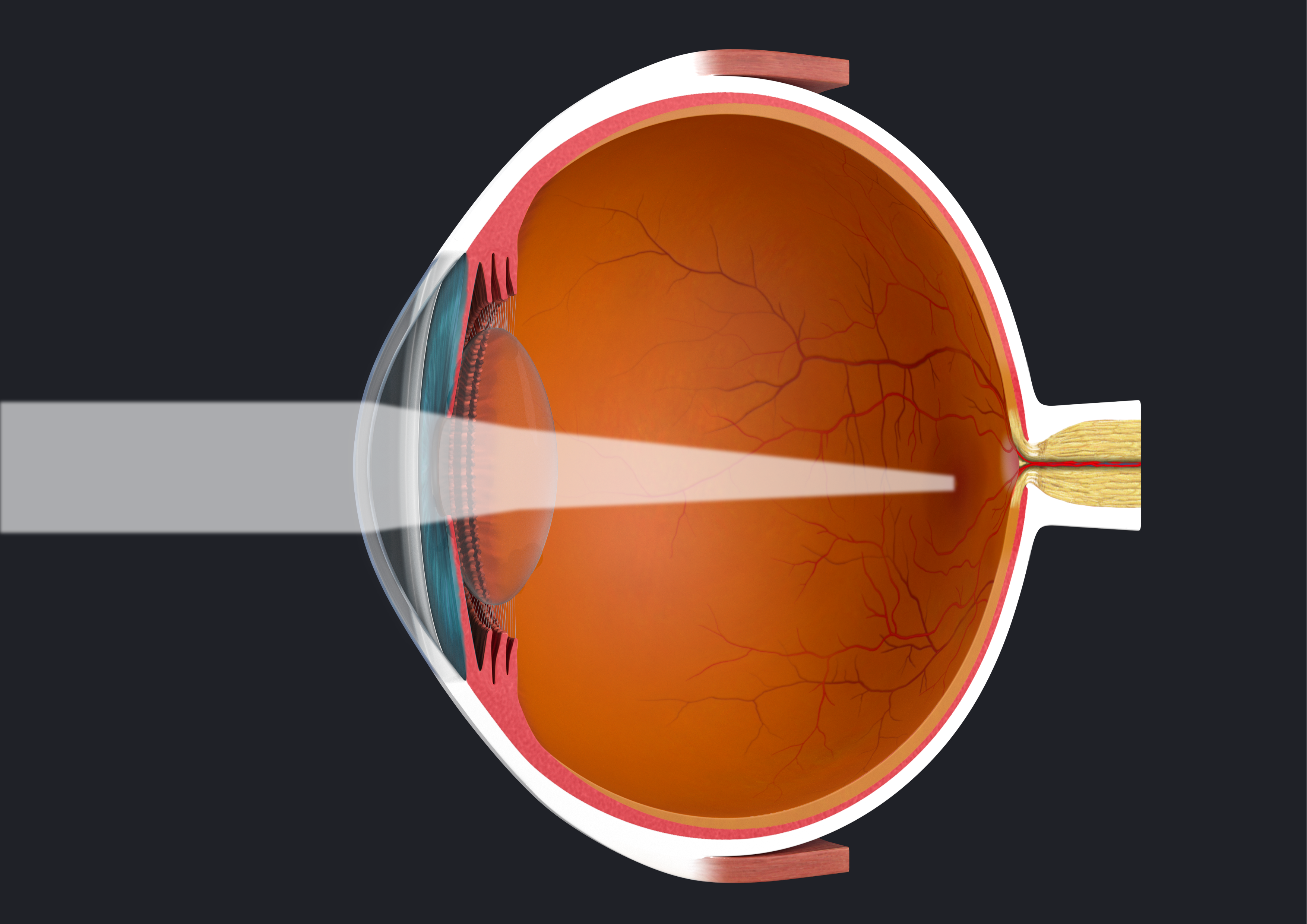
Emmetropia describes the condition in which no refractive error is present. In order to see clearly, the focal point of the incoming light must fall precisely on the retina. Ideally, the incoming light rays are bent by the cornea and the crystalline lens of the eye in such a way that they meet exactly on the fovea and produce a sharp image. 

Myopia

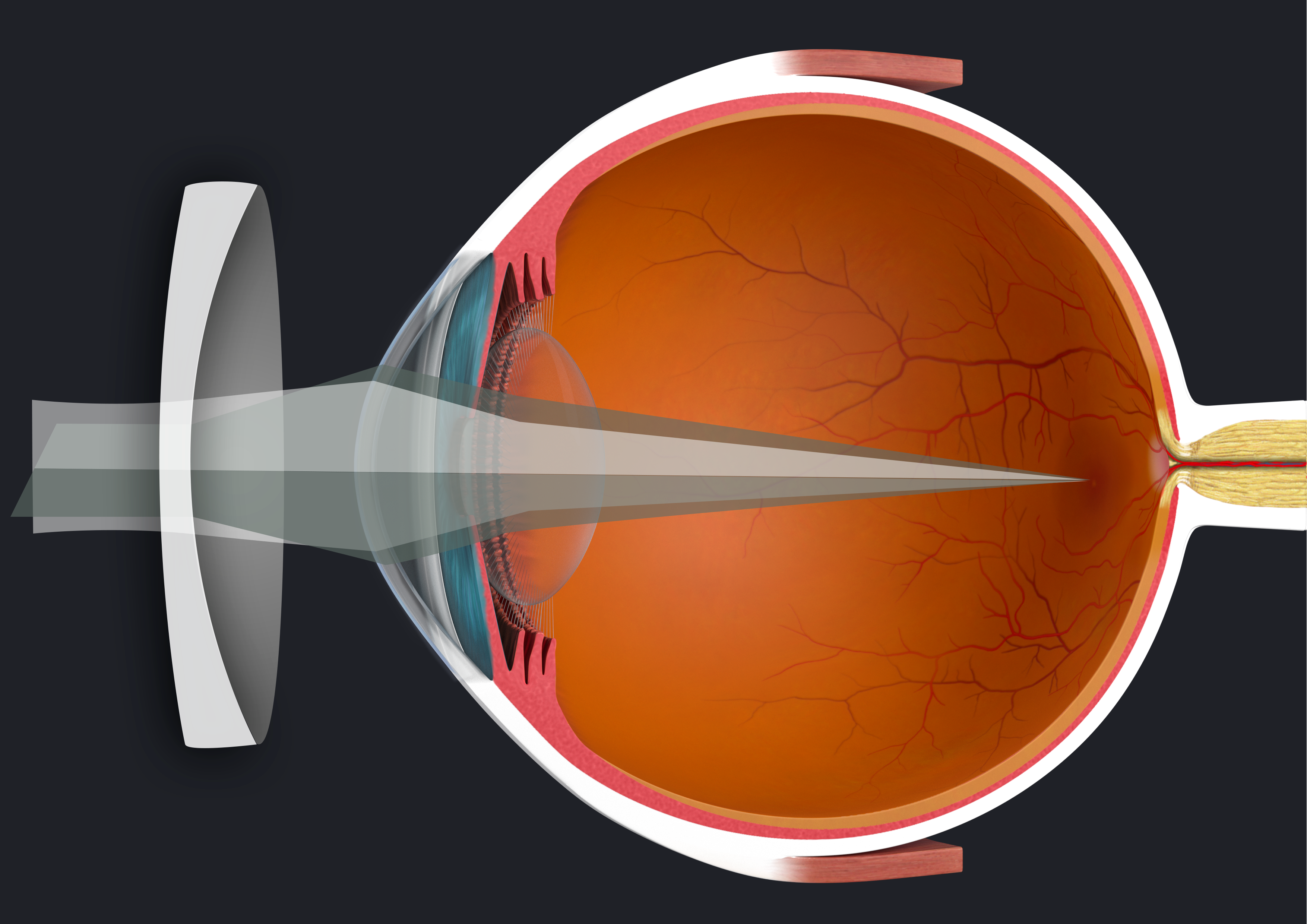
Myopia is a refractive error of the eye in which the focal point—and thus the sharp image—lies in front of the retina. High myopia of more than -6.0 diopters is more likely lead to pathological changes in the retina. 

In myopia, the refractive power of the eye is too high for the length of the eye. 

In axial myopia, the mismatch occurs because the eye grows too long but the refractive power is normal. In refractive myopia, the refractive power of the cornea and/or crystalline lens is too high with normal eye length. 

Hyperopia

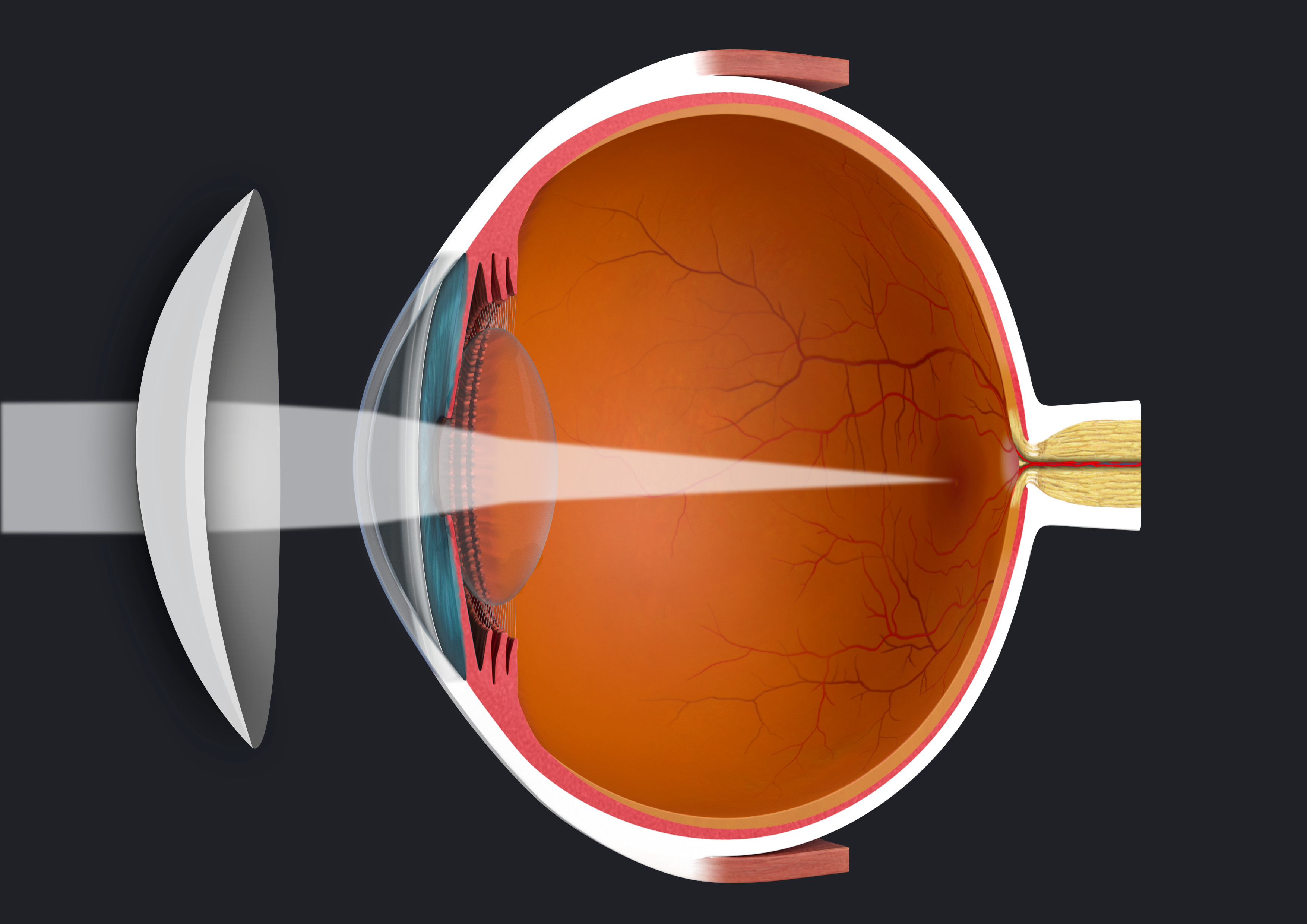
Hyperopia is a refractive error of the eye in which the focal point—and thus the sharp image—lies behind the retina.

In hyperopia, the refractive power of the eye is too low in relation to the length of the eye.  

In axial hyperopia, the eye is too short with normal refractive power. In refractive hyperopia, the refractive power of the cornea and/or crystalline lens is too low with normal eye length. 

Astigmatism

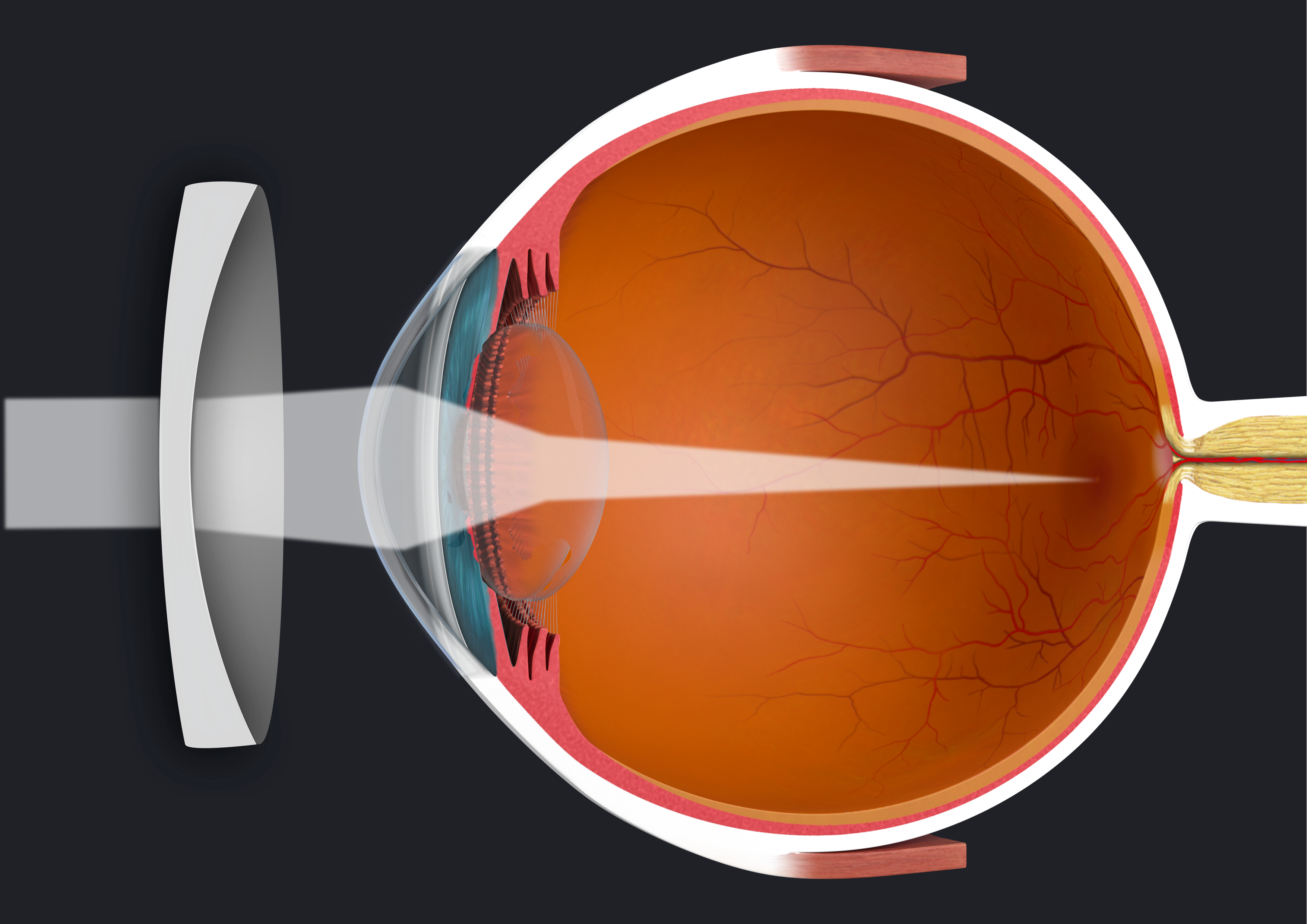
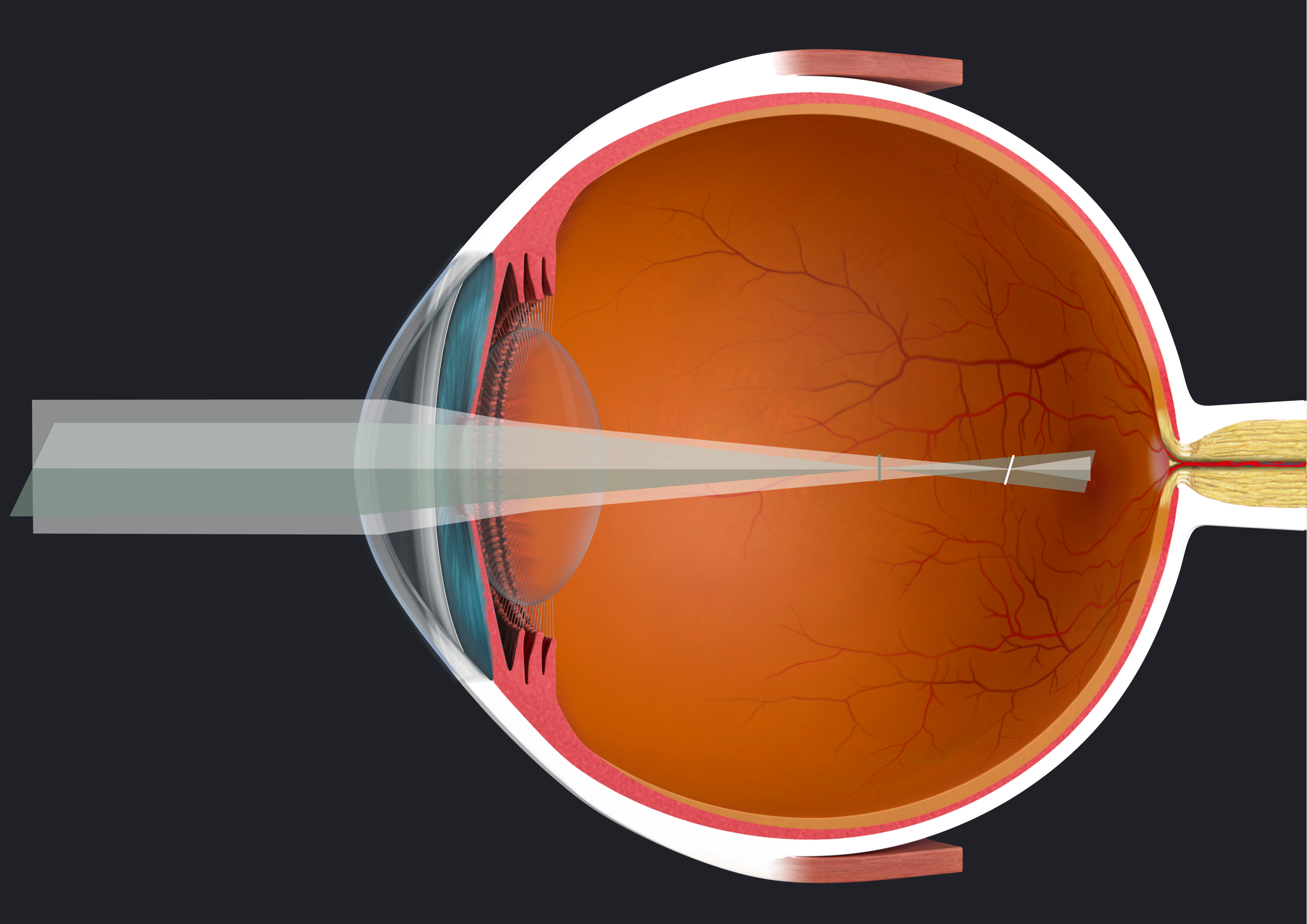
Astigmatism is a vision disorder that causes blurred or distorted vision. 
Due to an irregular curvature of the cornea—or, less commonly, the crystalline lens of the eye—light entering the eye does not focus on a single point on the retina, resulting in blurred vision.

Astigmatism is often present from birth. The extent of astigmatism can vary throughout life and depends on ethnicity, genetic predisposition, changes in the shape of the eyelids, cornea and crystalline lens.

Eye diseases such as keratoconus, amblyopia, eye surgery and injuries can also influence the severity.

Presbyopia

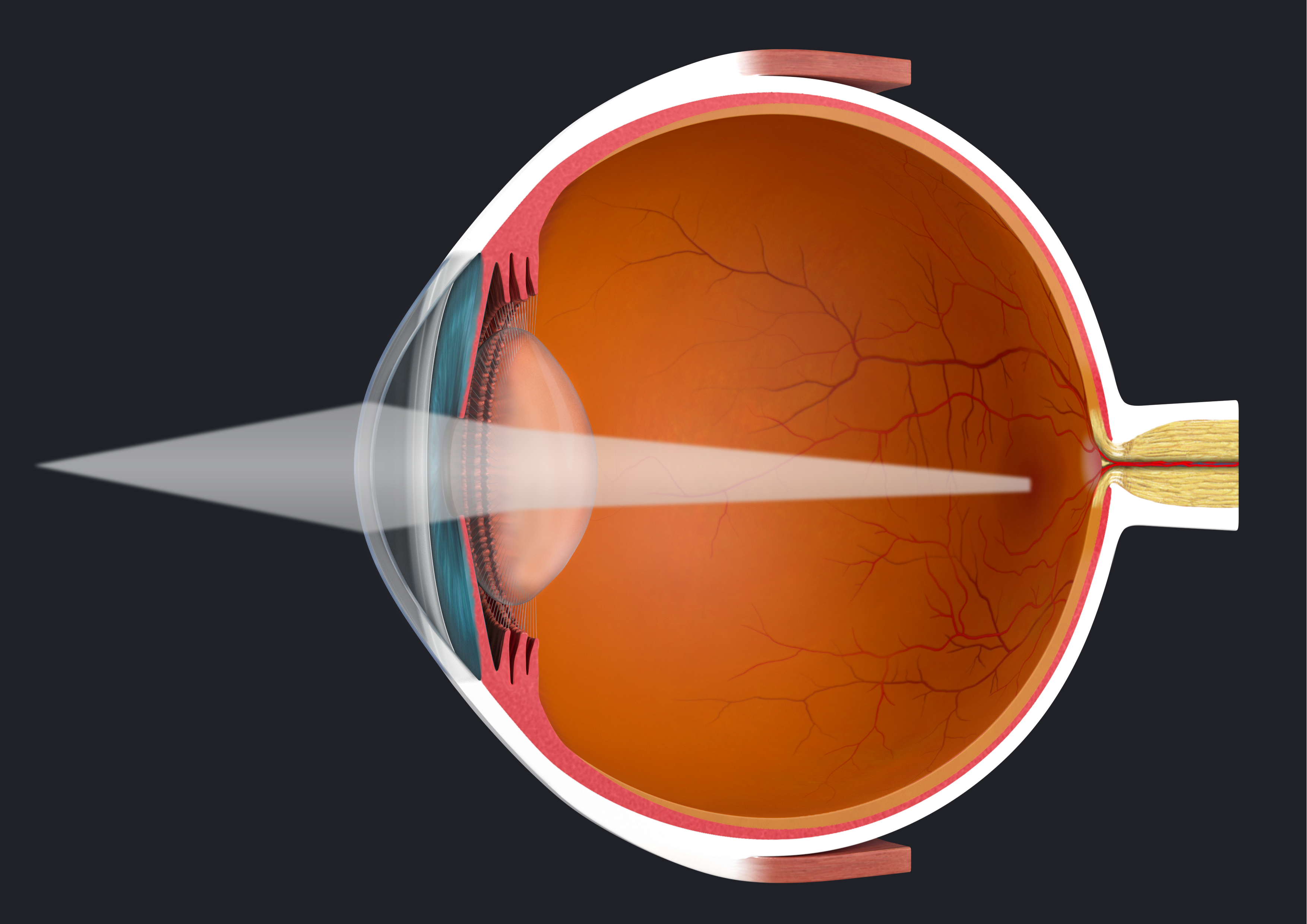
Presbyopia is a natural age-related process of the crystalline lens, which increasingly makes it difficult to see nearby objects or letters.

Lens fibers are continuously produced in the crystalline lens, making it thicker and stiffer over time. As a result, it loses its flexibility and ability to change curve. This restricts accommodation—the ability to focus on near objects—and makes it impossible with advancing age.

Uncover our Products